
Workshop: Circular Thinking for Six-Year-Olds
How to nurture circular thinking in children?
“Explain it as if you were talking to a five-year-old.”
This is common advice when it comes to presenting your work.
At the start of the year, I took on that challenge—introducing my profession to a group of six-year-olds. Finding a good title to explain my job was already challenging, since it can be slightly adjusted depending on the project. But I managed to find a good answer:
I am a Sustainability Consultant with a focus on the circular economy.
I was curious: how do I present myself, share the work, and make the relevant concepts meaningful, playful, and accessible to children?
Designing the Workshop
Planning the session turned out to be more complex than I expected. My initial idea was to introduce the circular economy through the 10 R-strategies—Refuse, Rethink, Reduce, Reuse, Repair, Refurbish, Remanufacture, Repurpose, Recycle, and Recover. However, covering ten strategies in a 60-minute session with six-year-olds quickly proved unrealistic.
So, I turned to one of my AI sidekicks, ChatGPT, with a simple prompt: How can I introduce circular economy concepts to six-year-olds?
The result given was a workshop concept titled “The Journey of Stuff” (De Reis van Spulletjes), built around three simple learning objectives:
Things can last longer
We can think differently about things
Sometimes waste isn’t waste, but something new
The proposal divided the workshop into five parts:
Warm-up story
Moving game: Where Does It Go?
Fix-it station
Make-something-new activity
Mini reflection circle
Given the limited time available, I simplified this structure into three core sessions.
Session 1: Introduction
We began by talking about what a consultant does. Mainly, consultants help companies understand and solve specific issues. I explained further that there are many types of consultants, and my work focuses on sustainability (duurzaamheid).
I deliberately avoided using the term circular economy at this stage. Instead, I used simple, everyday language to guide the conversation. This was a conscious two-pronged approach: first, to suit the children’s age group, and second, because the session was conducted in Dutch—a language I am still developing for professional use.
It was a good warming-up session, and I received some interesting questions, such as “Is the job difficult?” and “Why do you want to do this?”
Session 2: What Happened Next?
This session was developed based on the second part of the proposal - the Moving Game: Where Does It Go? At its core, this part is connected to a phase - the next cycle of life which is part of our sustainable strategies tool, DOT (Direction of Transition). The focus of this phase is exploring “what happens to a product and its parts after their service is no longer needed?”
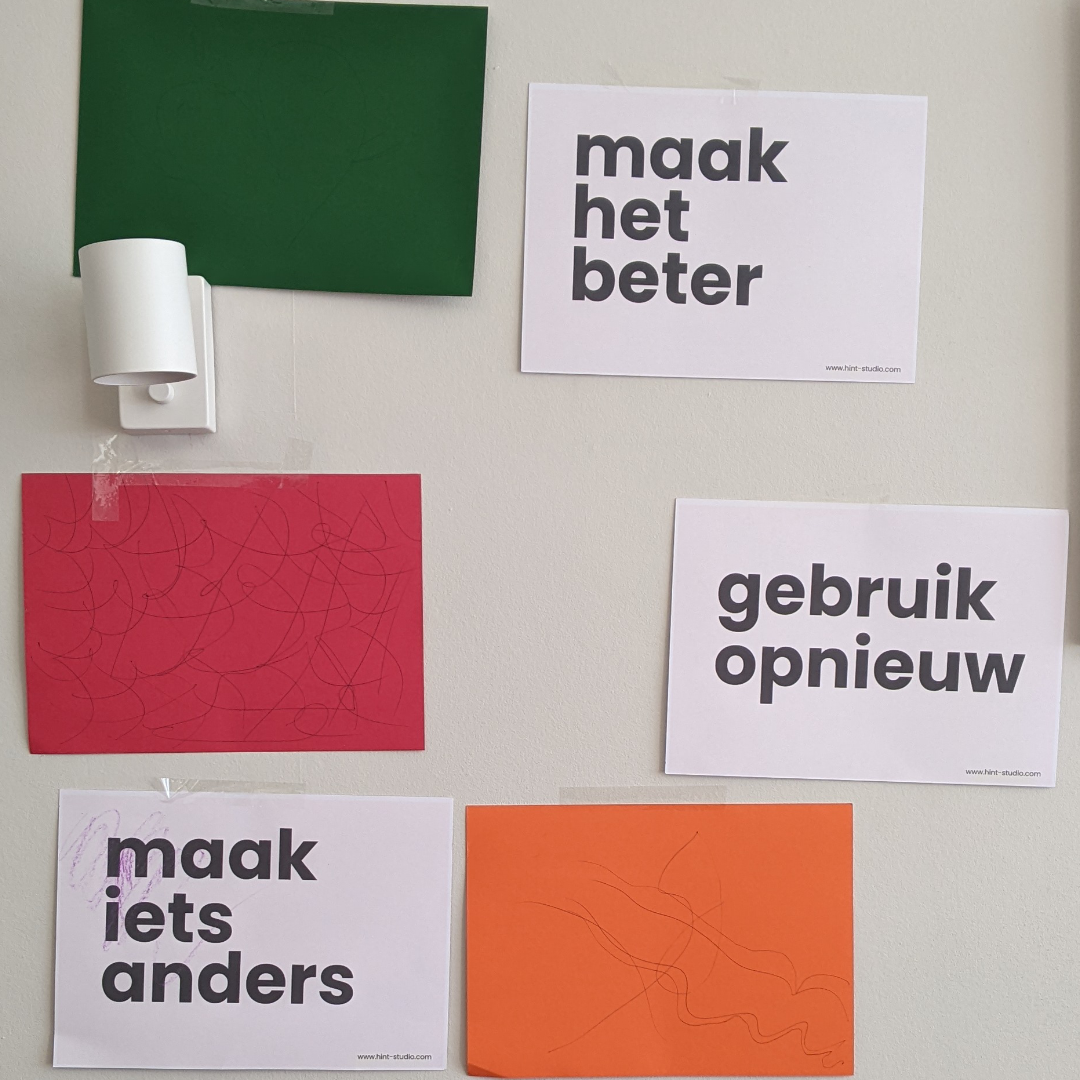
The compilation of strategies was simplified into three main actions.
Use Again (Gebruiken Opnieuw)
Fix It (Maak het beter)
Make Something Else (Maak iets anders)
During the session, each action is shown on an A4-sized poster, paired with a different colored sheet for easy identification. The posters are placed around the room, and the children run to them.
Five used items were chosen to explore and discuss with the children:
A sippy cup
A packaging box
An old handkerchief
Broken jewellery
Torn house slippers
For each item, I showed it to the group and asked the children to move to the options they felt were most suitable. Once everyone had chosen their “base,” I asked what turned out to be the best question of the session:
“Why did you choose this?”
Their answers were thoughtful, imaginative, and often surprisingly sophisticated. Through their responses, they demonstrated an intuitive understanding of the core idea behind the circular economy:
What happens next, once we no longer need this?
There were no right or wrong answers. The goal was simply to build the habit of thinking beyond disposal—to strengthen the “what’s next?” muscle.
Some examples of their ideas:
Sippy cup
“It can be reused by another baby.”
“I can use it as a cup.”
“I can play with water using it.”
Old handkerchief
“We can wash it and use it again.”
“It can be a blanket for my doll.”
“We can cut it and make a dress for a doll.”
This session captured a crucial moment of decision—the moment where we decide what to do with things that no longer serve their original purpose for us. In modern society, we make these decisions constantly, which over time creates a mental burden. The easiest option is often to throw things into a general bin and move on.
But if this moment of reflection is nurtured from a young age, children may also grow more aware of the responsibility that comes with bringing new things into their lives. Over time, this awareness can gently influence consumption habits and behavior.
Session 3: Something New from Something Used
The final session focused on repurposing. I shared three simple projects I had made, each showing the original material alongside the transformed item:
A batik painting kit made using old bed sheets instead of new fabric
A woven paper basket made from packaging waste
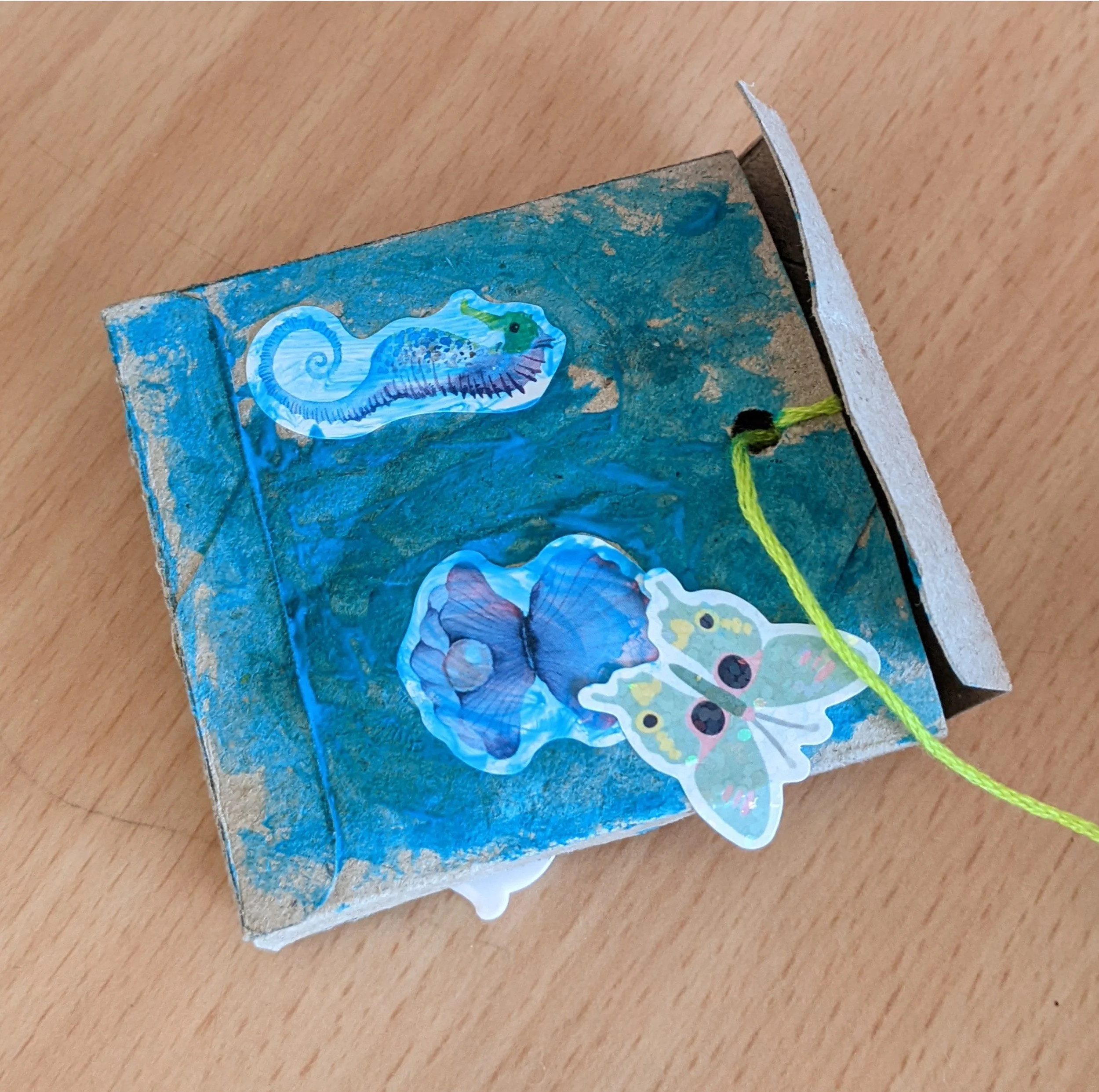
A small box made from a toilet paper roll
The aim was to show how things can be repurposed when they are no longer useful in their current state. It is a good reminder not to consider the original items as waste.
Once something is labeled as waste, our preconceived biases take over. Removing “waste” as an option opens up creative possibilities and supports circular thinking.
The focus is on the transition from item A to item B, rather than from item A to waste, and then from waste to item B. Together, we discussed what else each item could become. It was again a lively discussion about what we can do with the three materials presented.
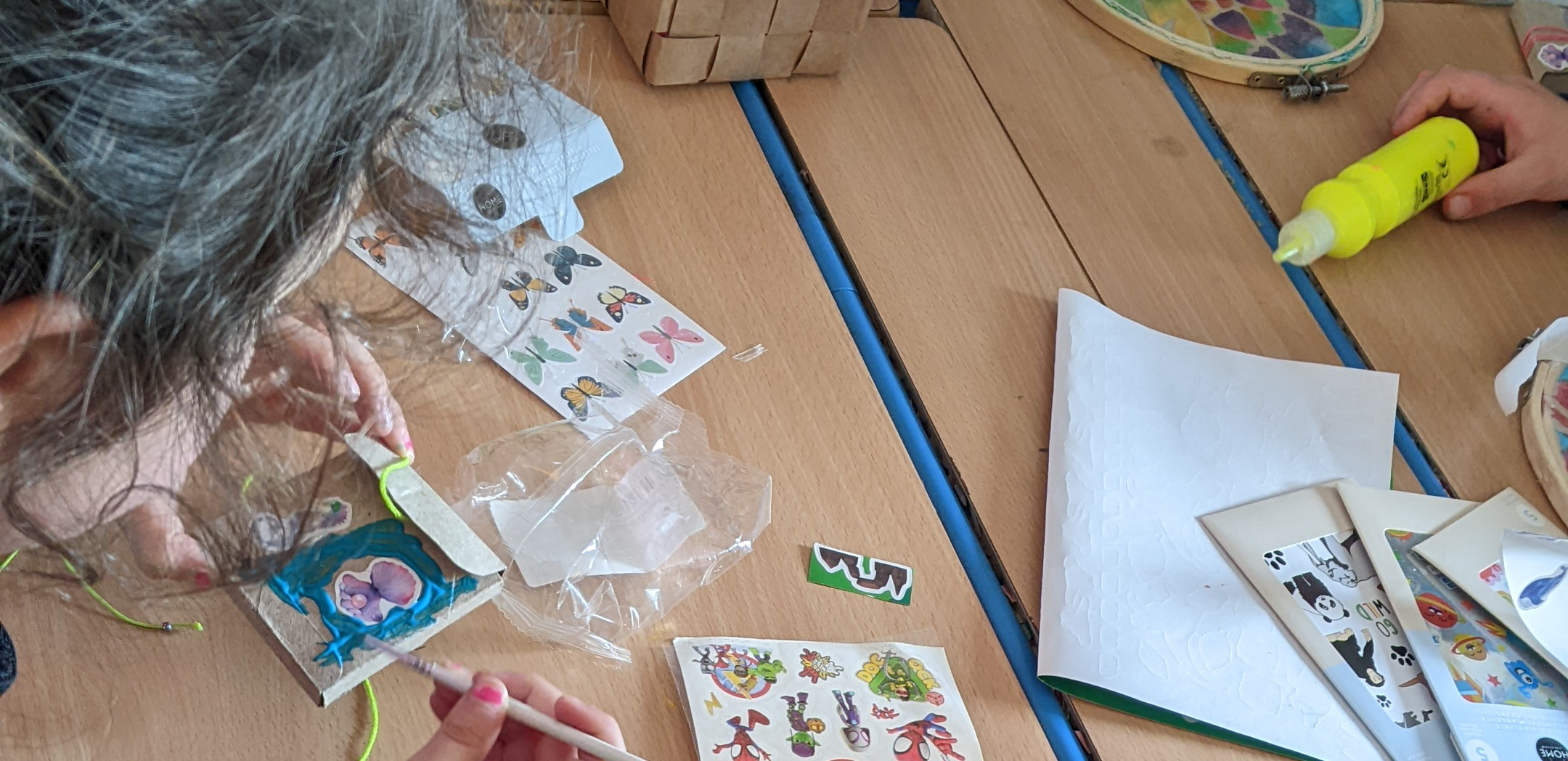
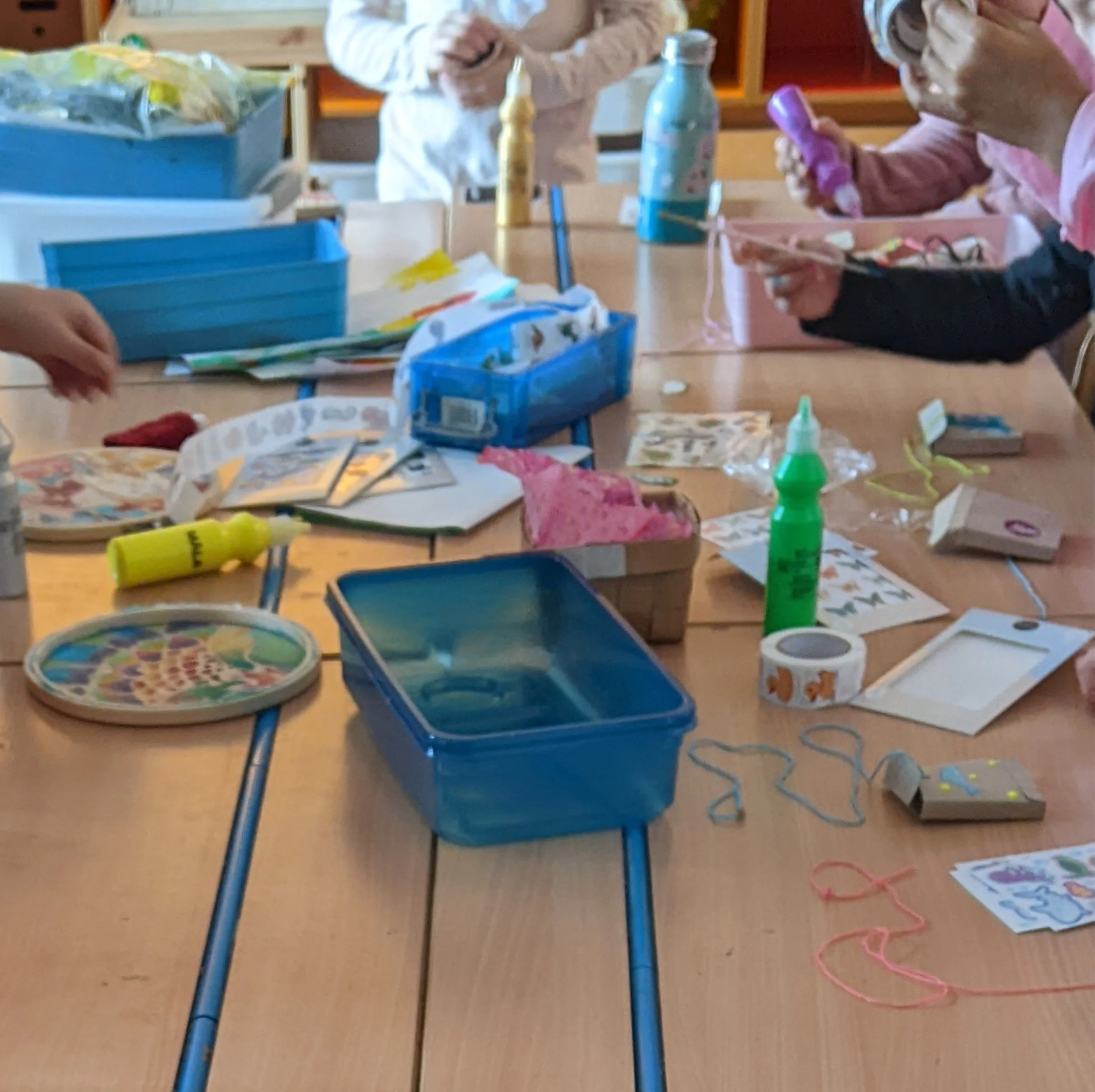
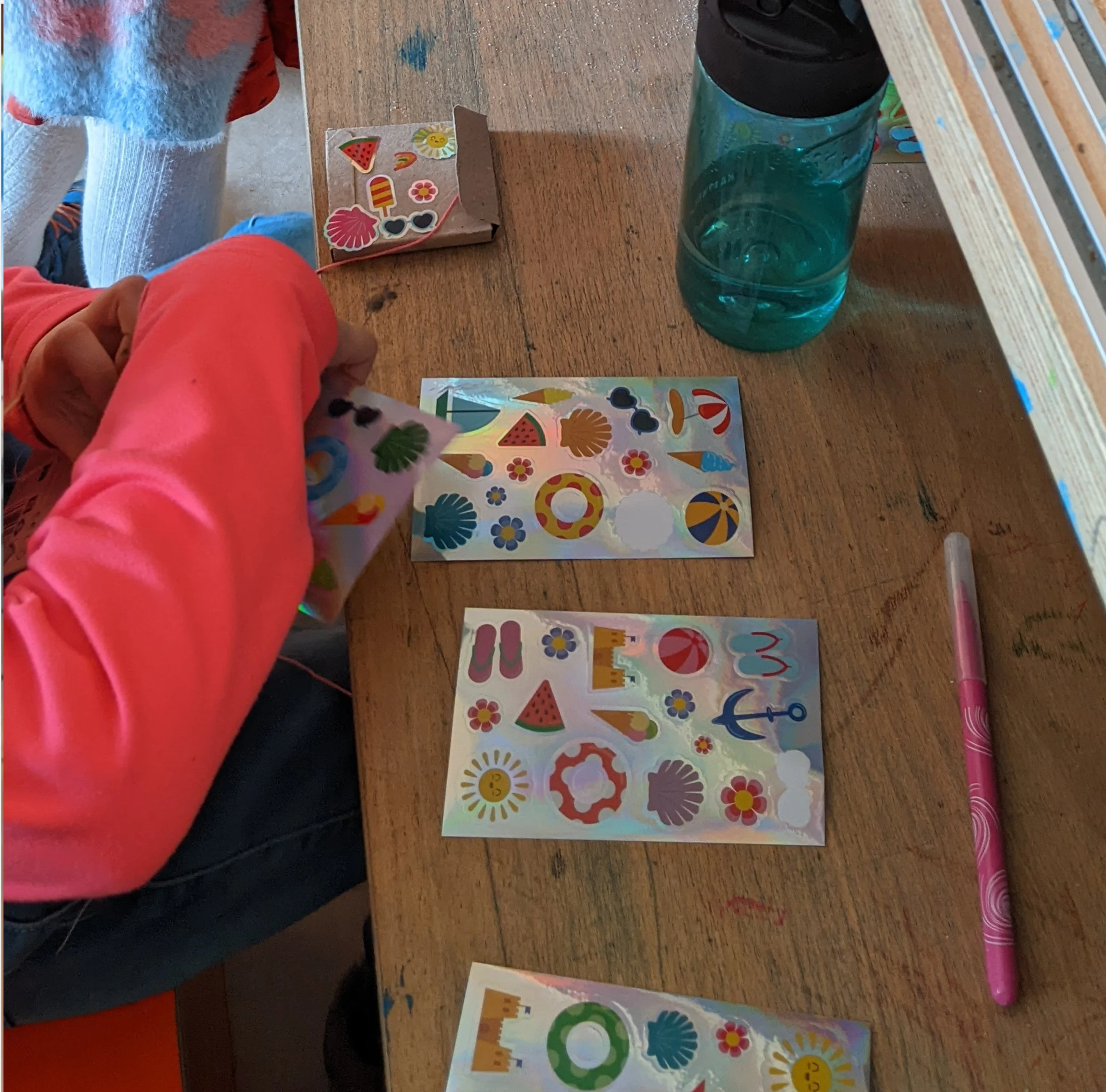
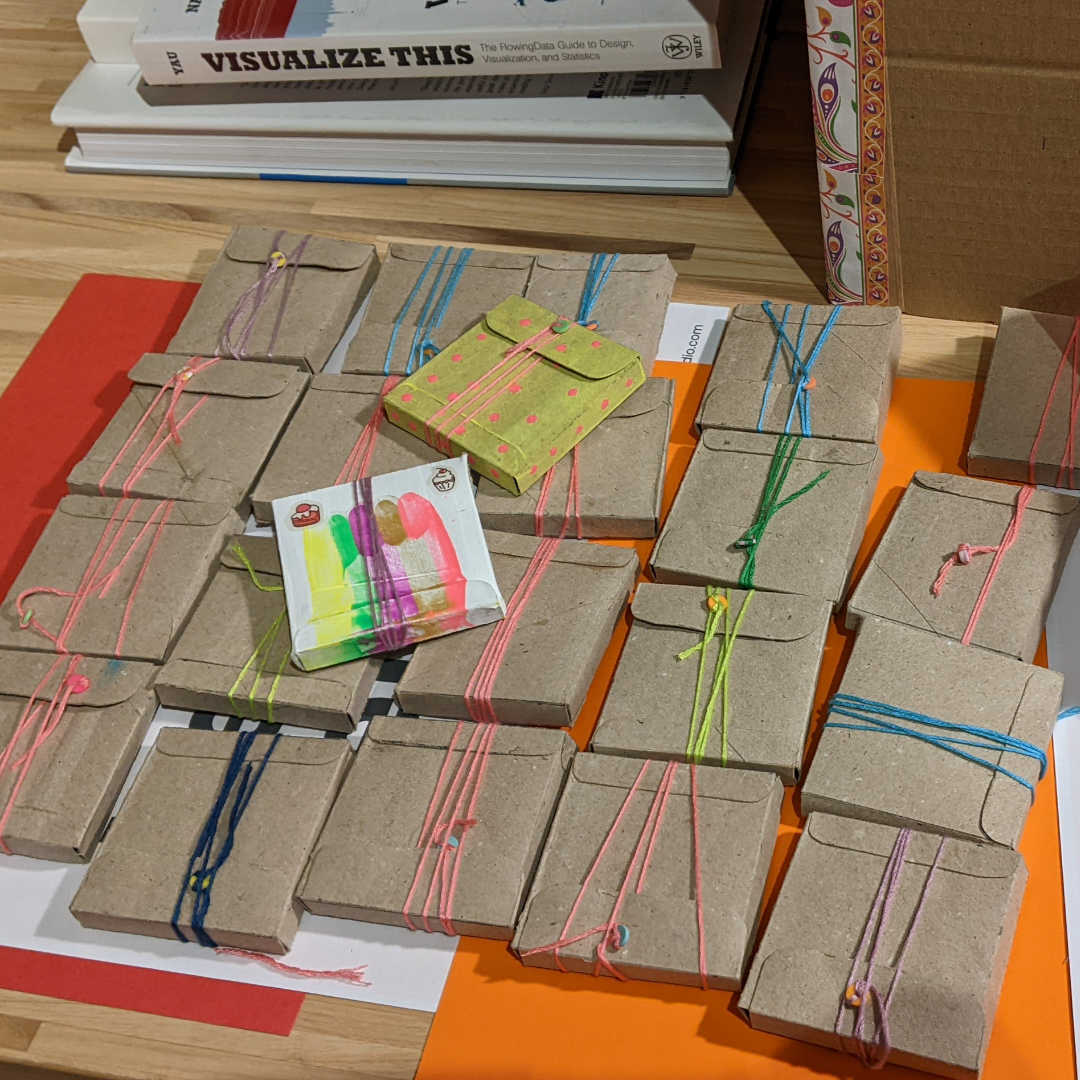
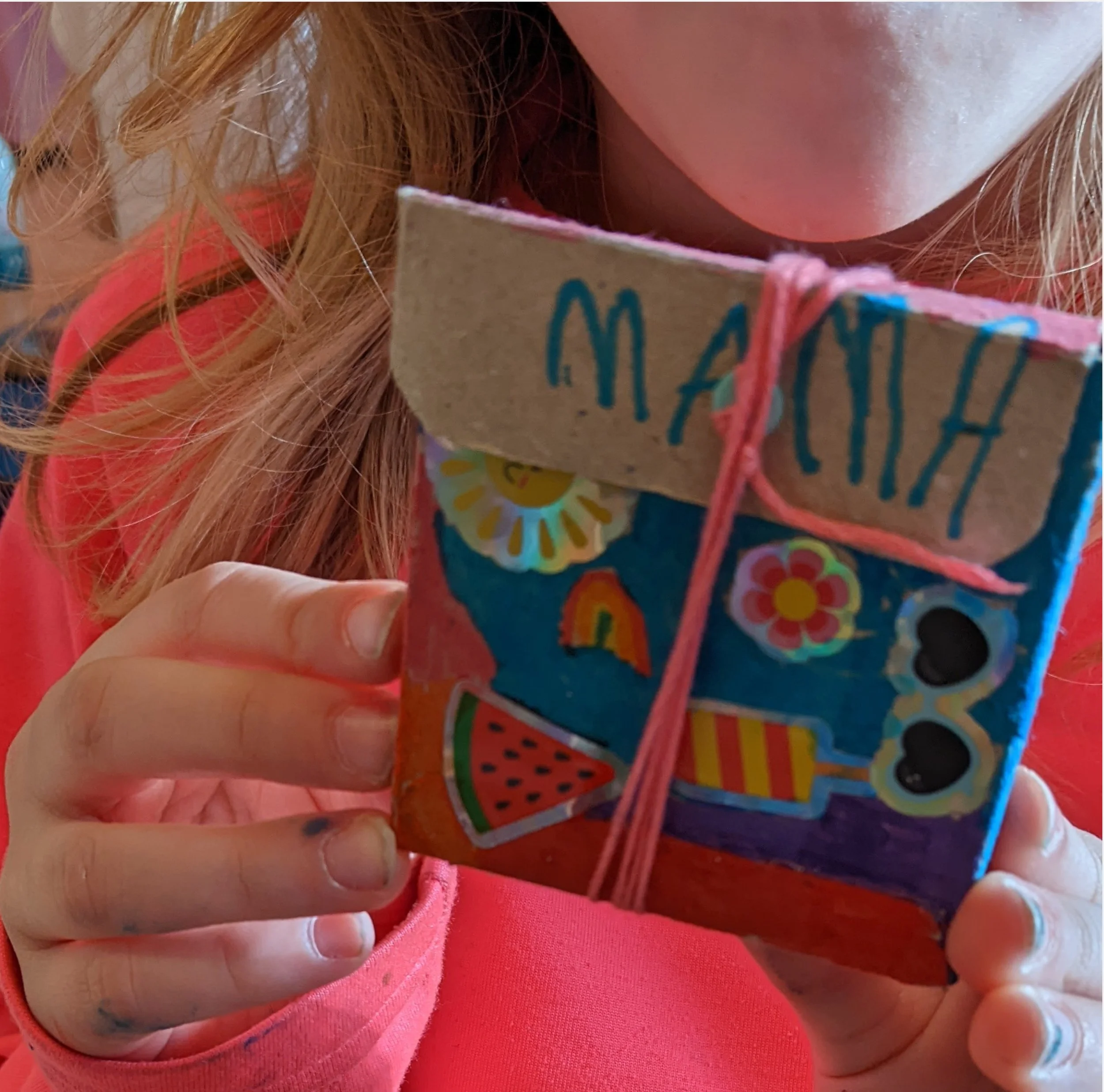
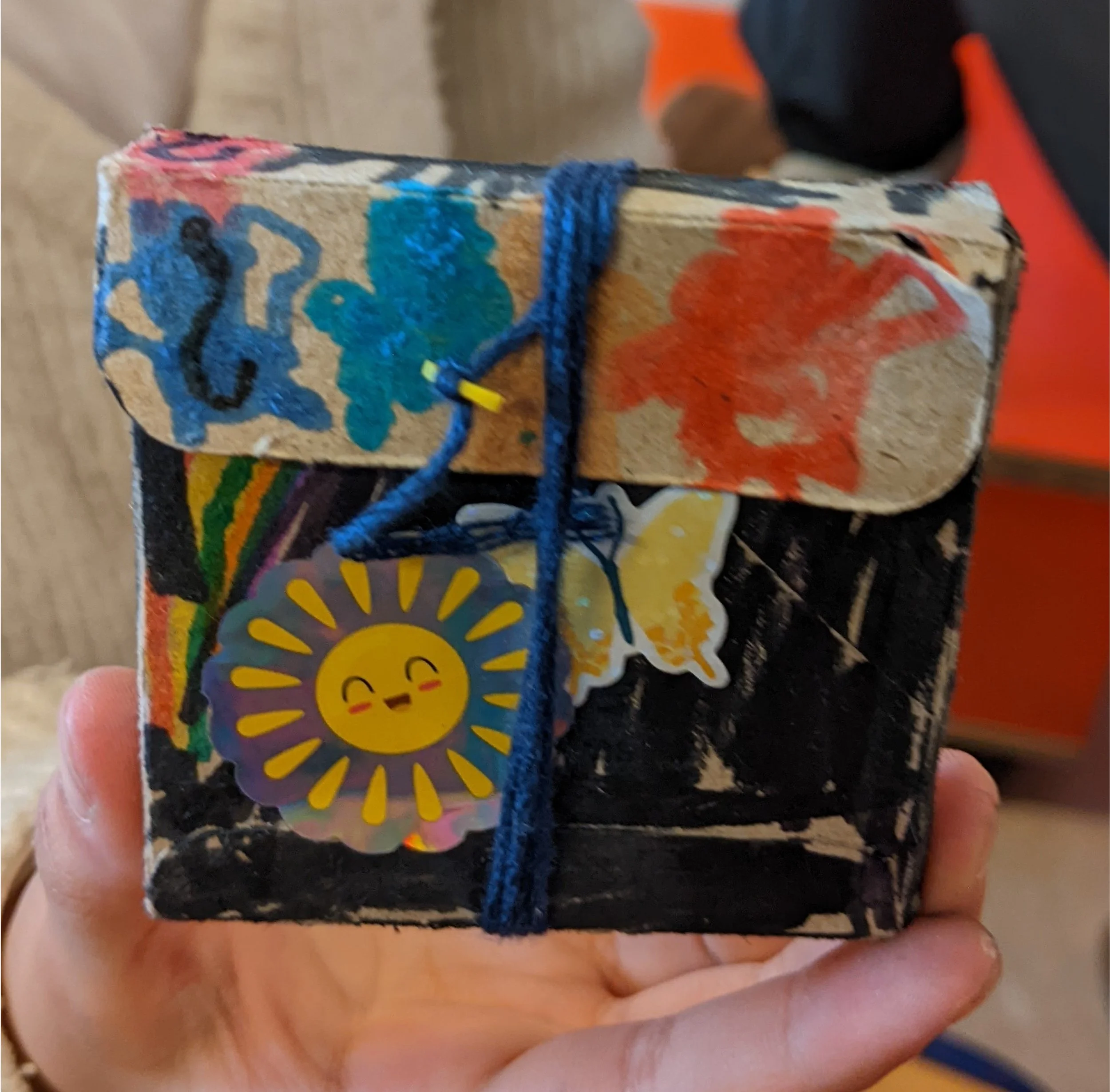
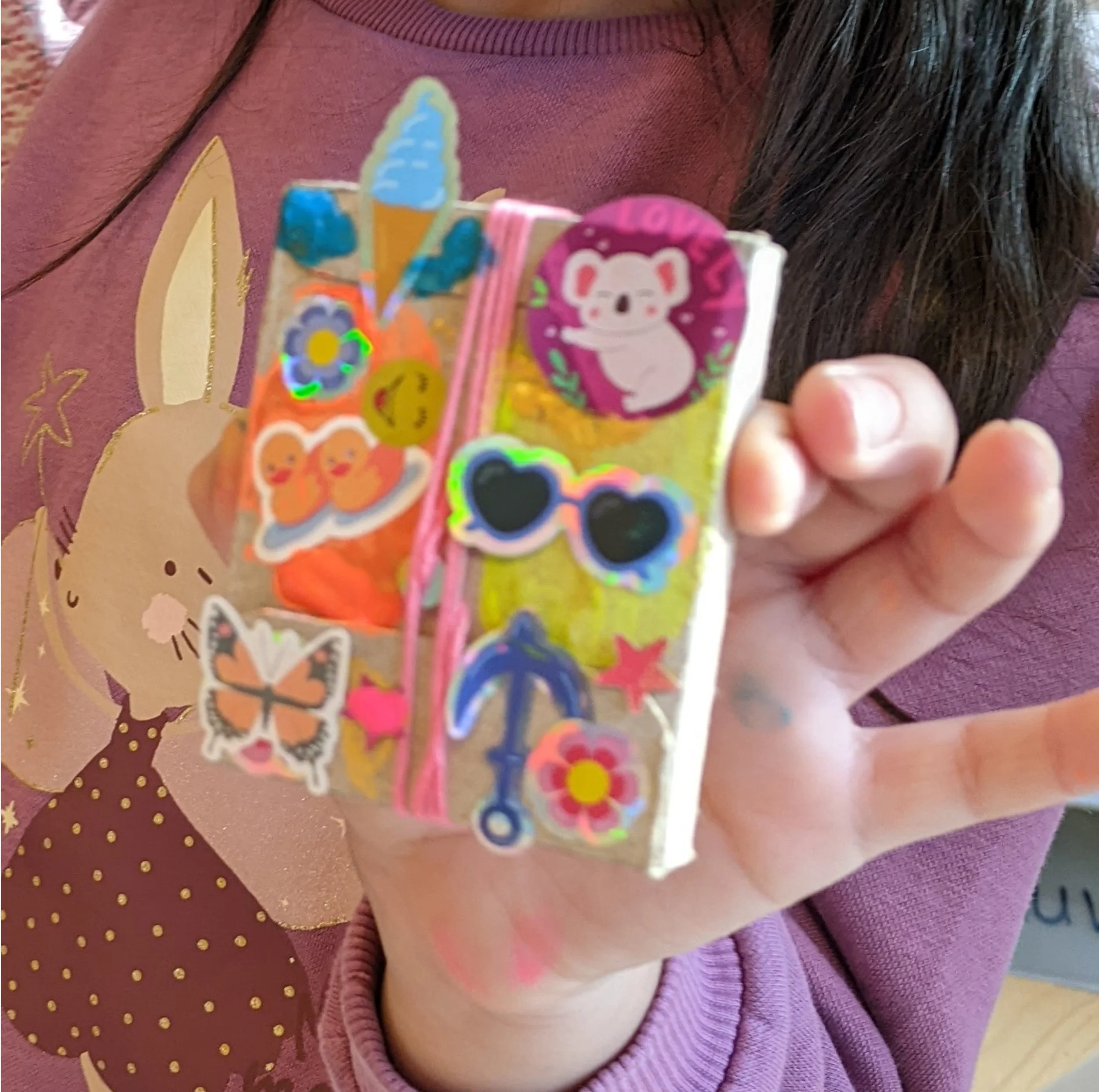
Then, for the hands-on activity, I had prepared small boxes made from toilet paper rolls. Originally, the plan was to make them together, but due to time constraints, I demonstrated the steps instead—explaining how a toilet roll could become a box for storing small items like earphones and jewelry.
The children then decorated and personalized their boxes using art supplies and stickers, proudly sharing their design choices and ideas.
Closing Session
The end of the workshop was a bit hectic, but we managed a short closing circle. I emphasized the importance of thinking about the things we no longer need and briefly shared another aspect of my job: testing ideas before presenting them to clients.
With more time, it would have been wonderful to ask the children:
Which part of the workshop did they like best
What they remembered from each session
Such reflection moments are something I would love to include in future workshops.
Insights from the Experience
Initially, I considered showing images of mountains of waste—a common way to introduce environmental issues. However, I realized that for this new generation, the priority is not guilt or fear, but building habits, lifestyles, and cultures around the things that fill their daily lives: where they come from, how they are used, and what their next life could be.
After all, the waste problem is not something they created.
This workshop somewhat reenergized me on the importance of continuing to explore, identify, and implement circular solutions. It was incredibly rewarding to engage with such young participants. Their fresh perspectives and openness were inspiring, and their ideas showed that circular thinking is not foreign to them at all.
One key takeaway stood out: when big words and jargon are removed, clarity and action naturally follow. This reminded me of a piece of advice I received when writing about sustainability—sometimes it’s better not to use ‘the word’ at all, because it can end up meaning everything and nothing at the same time.
If you are interested to conduct similar workshop, you can click here to download the workshop kit (with posters in English and Dutch).
Also, click here to check out the tutorial for the small boxes from toilet paper rolls.
Feel free to reach out at connect@hint-studio.com with any questions or inquiries about our content and services.